Over the past few years, remote work opportunities in the accounting and finance sectors have surged, offering you the flexibility to manage your career from the comfort of your home. If you’re looking to transition into a remote accounting job or enhance your existing skills, this guide will equip you with the necessary steps to successfully launch your career in finance and bookkeeping. Discover how to navigate job platforms, hone your expertise, and position yourself as a competitive candidate in the evolving landscape of remote work.
Key Takeaways:
- Research and choose the right accounting software to enhance your skills and productivity.
- Create a professional online presence, including a polished resume and LinkedIn profile, to attract potential employers.
- Network actively with other professionals in the field to discover job opportunities and gain industry insights.
Understanding Remote Accounting Roles
In the rapidly evolving landscape of finance, remote accounting roles provide flexibility and growth opportunities. As businesses increasingly adopt digital practices, the demand for skilled professionals who can manage finances from anywhere is rising. Your understanding of remote roles will help you navigate this field effectively and identify the positions that best suit your expertise.
Types of Positions Available
Various remote accounting positions cater to different skill sets and interests. Common roles include:
- Bookkeeper
- Accountant
- Tax Preparation Specialist
- Financial Analyst
- Payroll Specialist
Assume that each position has distinct responsibilities, from managing daily transactions to conducting financial forecasts.
| Position | Primary Responsibility |
| Bookkeeper | Record daily financial transactions. |
| Accountant | Prepare and analyze financial statements. |
| Tax Preparation Specialist | Assist clients with tax filings and compliance. |
| Financial Analyst | Evaluate financial data to guide business decisions. |
| Payroll Specialist | Manage payroll processing and employee compensation. |
Key Skills Required
To stand out in remote accounting roles, you must possess specific skills tailored to the demands of online finance work. Technical proficiency in accounting software, strong analytical abilities, and attention to detail are imperative. You should also exhibit excellent communication skills and the ability to work independently, as remote positions often require self-motivation and organization.
Technical skills are paramount; proficiency in software like QuickBooks or Xero enhances your value. Analytic skills empower you to interpret data and provide actionable insights. Attention to detail ensures accuracy in financial reporting, while communication allows clear interaction with clients and teams. Managing your time and tasks independently can set you apart in a remote environment, making it vital to cultivate these competencies as you launch on your remote accounting career.
Setting Up Your Home Office
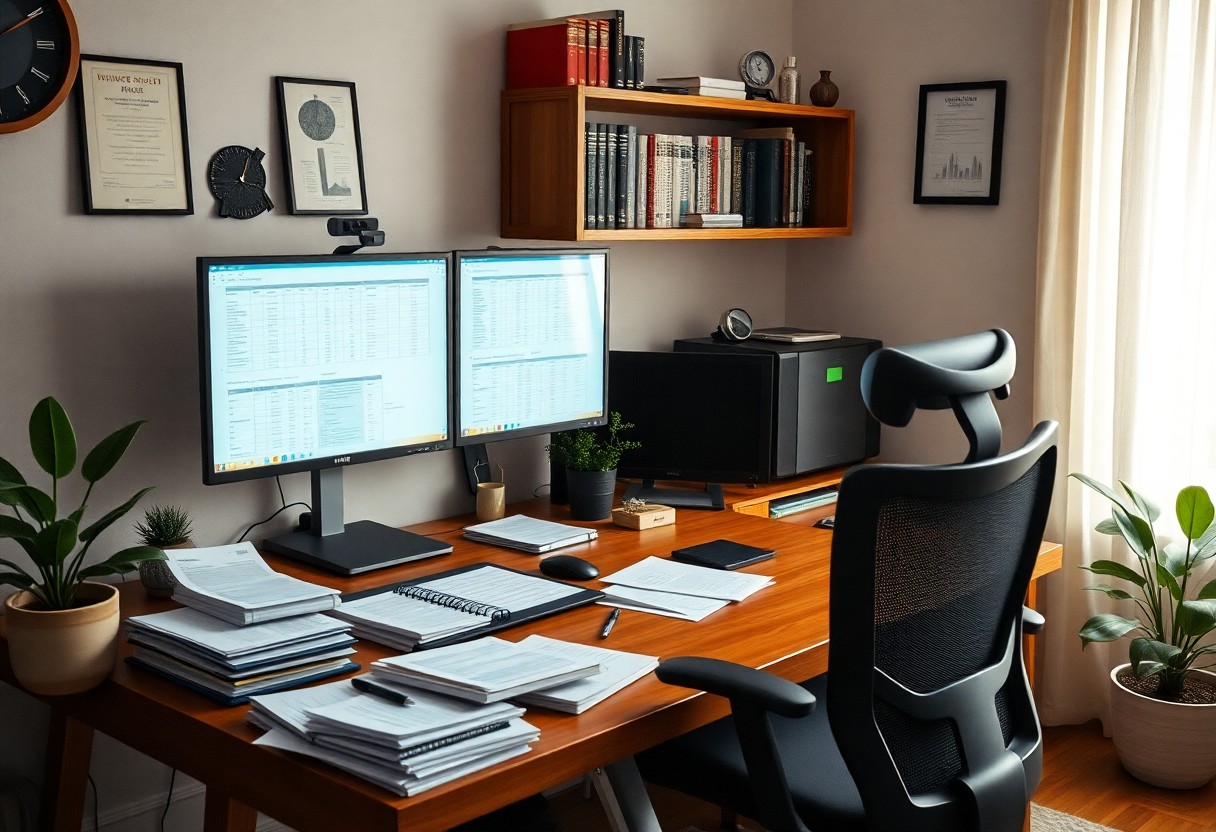
Your home office directly impacts your productivity and success in remote accounting roles. Establish a dedicated space that minimizes distractions and fosters focus. Opt for a quiet location away from household noise, and ensure that it is well-lit, ideally with natural light. Personalize your area with motivational items, but keep it organized to maintain a professional atmosphere. Ergonomic furniture also enhances comfort during long hours of work, contributing to overall job satisfaction.
Essential Equipment and Tools
Investing in the right equipment is foundational to succeed in remote accounting. A reliable computer with adequate processing power is imperative for multitasking and running complex software. High-speed internet ensures uninterrupted workflow, while a dedicated accounting software suite, such as QuickBooks or FreshBooks, simplifies financial management. Consider accessories like dual monitors for efficiency and a printer/scanner for easy document handling.
Creating a Productive Work Environment
The ambiance of your workspace significantly influences your productivity. Personalize it with items that inspire you, but avoid clutter that can distract from your tasks. Regularly decluttering your space enhances focus, while setting consistent working hours helps establish boundaries between personal and professional life. Adding plants or soft background music can also create a calming environment that boosts concentration.
Lighting plays a pivotal role in setting the right mood for work. Ensure your workspace has both ambient lighting and task lighting to reduce eye strain, particularly if you spend hours in front of a monitor. Minimize distractions by using noise-canceling headphones or soft background music. Establish a daily routine that includes breaks to recharge your mind and body, enabling sustained productivity throughout your workday.
Gaining Relevant Qualifications
To excel in remote accounting and bookkeeping jobs, gaining the right qualifications can set you apart. You can start with a degree in accounting, finance, or a related field, which often serves as the foundation for your career. Many employers prefer candidates with formal education, so pursuing additional coursework or training relevant to your specific interests in finance can enhance your resume and prepare you for the challenges of remote work.
Educational Requirements
A bachelor's degree in accounting or finance is typically required for many remote accounting positions. This education equips you with necessary skills in financial analysis, tax preparation, and management accounting. For entry-level roles, an associate degree or relevant experience combined with ongoing education may suffice. Continuing education and specialized courses can enhance your expertise and appeal to potential employers.
Certifications in Finance and Bookkeeping
Certifications can significantly boost your credentials in finance and bookkeeping. Options such as the Certified Public Accountant (CPA), Certified Management Accountant (CMA), and QuickBooks Certified User can enhance your competitiveness. Employers often look for these certifications when hiring for remote positions, as they demonstrate your commitment to the profession and validate your skill set.
Certifications like CPA and CMA require passing rigorous exams and meeting experience criteria, but they offer substantial career advantages. For instance, a CPA can command higher salaries and gain access to advanced job opportunities, while QuickBooks certification indicates proficiency in widely-used accounting software. Pursuing these certifications not only enriches your knowledge but also signals to employers your dedication to maintaining high standards in financial practices, making you a more attractive candidate in the remote job market.
Job Searching Strategies
Utilizing effective job searching strategies can significantly enhance your chances of finding remote accounting positions. Tailor your resume and cover letter specifically for remote roles by emphasizing your ability to work independently and manage tasks without direct supervision. Leverage job boards that specialize in remote work and finance roles to discover opportunities that match your skills and interests.
Finding Remote Job Listings
Explore specialized job boards like FlexJobs, Remote.co, and We Work Remotely, which feature curated remote accounting positions. Additionally, mainstream platforms such as LinkedIn and Indeed have filters for remote jobs. Set up job alerts based on your targeted roles to streamline your search process and stay updated on new listings.
Networking and Building Connections
Networking within the finance and accounting community can open doors to hidden job opportunities. Attend virtual conferences, participate in online forums, and connect with professionals on LinkedIn. You can join relevant groups dedicated to remote work in accounting, allowing you to share knowledge and learn about potential job leads.
Attend industry webinars and local meetups—many online events offer valuable networking opportunities. Engaging with fellow professionals not only expands your knowledge but also increases your visibility. Consider reaching out directly to individuals in roles you aspire to; many are willing to share insights or inform you of job openings within their organizations. Building a robust online presence can attract recruiters looking for candidates like you.
Preparing for Interviews
Preparation is key to success in interviews for remote accounting positions. Prior to your interview, research the company's financial practices, understand their software, and familiarize yourself with industry trends. Tailoring your responses to align with the company's values and goals will demonstrate your interest and commitment to the role. Practice your answers to common questions and have examples ready to showcase your skills and experiences effectively.
Common Interview Questions
Anticipating common interview questions can enhance your confidence and readiness. Be prepared to discuss your experience with accounting software, handling financial reporting, and ensuring compliance with regulations. Questions like “How do you prioritize tasks when deadlines are tight?” or “Describe a time you identified an error in a financial report” are often asked to assess your critical thinking and problem-solving skills.
Presenting Your Skills Effectively
Effectively presenting your skills during an interview can set you apart from other candidates. Use the STAR method—Situation, Task, Action, Result—to structure your responses, thereby clearly outlining your experiences. Demonstrating how you have saved time or improved accuracy in past roles resonates strongly with hiring managers in the accounting field.
Utilizing the STAR method allows you to concisely convey your qualifications. For instance, if asked about your ability to manage client accounts, describe a specific situation where you identified inefficiencies in reporting. Detail the task you undertook to reformulate the process, the actions you implemented, and the resulting improvements in client satisfaction or accuracy in reports. Quantifying your achievements, like reducing reporting time by 30%, provides tangible evidence of your skills and illustrates your potential value to the employer.
Best Practices for Remote Work
Adopting best practices for remote work can significantly enhance your productivity and job satisfaction. Setting up a dedicated workspace, utilizing collaboration tools, and establishing a daily routine are key steps. Additionally, you can explore the Bookkeeping Side Hustle: Make Money Online with ... to further augment your income while honing your skills.
Time Management Techniques
Effective time management techniques are necessary in a remote work environment. Utilizing tools like time-blocking can help you prioritize tasks, while the Pomodoro Technique allows for focused work intervals followed by short breaks. Incorporating digital calendars and task management software will keep you organized and accountable throughout your day.
Maintaining Work-Life Balance
Establishing boundaries between work and personal life can prevent burnout. Designating work hours, taking scheduled breaks, and communicating your availability with colleagues safeguard your personal time. Engaging in activities outside of work, such as exercise or hobbies, revitalizes your energy and maintains your passion for your job.
Maintaining a work-life balance involves more than just setting hours; it requires a conscious effort to unplug after work. Create routines that involve social interaction or physical activity, which can foster mental resilience. Regularly assess your workload to avoid excessive hours, and ensure you are using vacation days to recharge. Balancing these aspects ultimately enhances your productivity and job satisfaction in the long run.To wrap up
Drawing together the elements of starting a remote career in finance and bookkeeping, you can successfully transition into work from home accounting jobs by honing your skills, gaining relevant certifications, and leveraging online job boards. Ensure you explore opportunities that align with your expertise and interests. For valuable insights on this evolving field, you can check out Remote Accountant: What Is It? and How to Become One? to further your understanding and enhance your career prospects.
FAQ
Q: What qualifications are needed for remote accounting jobs?
A: Generally, a degree in accounting or finance is preferred. Professional certifications, such as CPA or CMA, can enhance job prospects. Familiarity with accounting software and strong analytical skills are also important.
Q: How can one find work from home accounting jobs?
A: Job boards such as LinkedIn, Indeed, and specialized sites like FlexJobs and Remote.co often list remote accounting positions. Networking within professional groups and associations can also lead to opportunities.
Q: What are the common responsibilities of a remote accountant?
A: Remote accountants typically manage financial records, prepare financial statements, reconcile accounts, handle tax filings, and assist clients with budgeting and financial planning. Communication with clients and team members is often done through digital platforms.
Q: What type of accounting software should I be familiar with?
A: Familiarity with popular accounting software such as QuickBooks, Xero, Sage, or FreshBooks is beneficial. Proficiency in Excel and understanding basic data analysis tools can also be advantageous.
Q: What are the advantages of working from home in accounting?
A: Working from home offers flexibility in hours, reduced commuting time and costs, and a comfortable work environment. It can also provide a better work-life balance, especially for those with family responsibilities.